



DOG member with vision:
Fritz Hertel and the Danger Islands
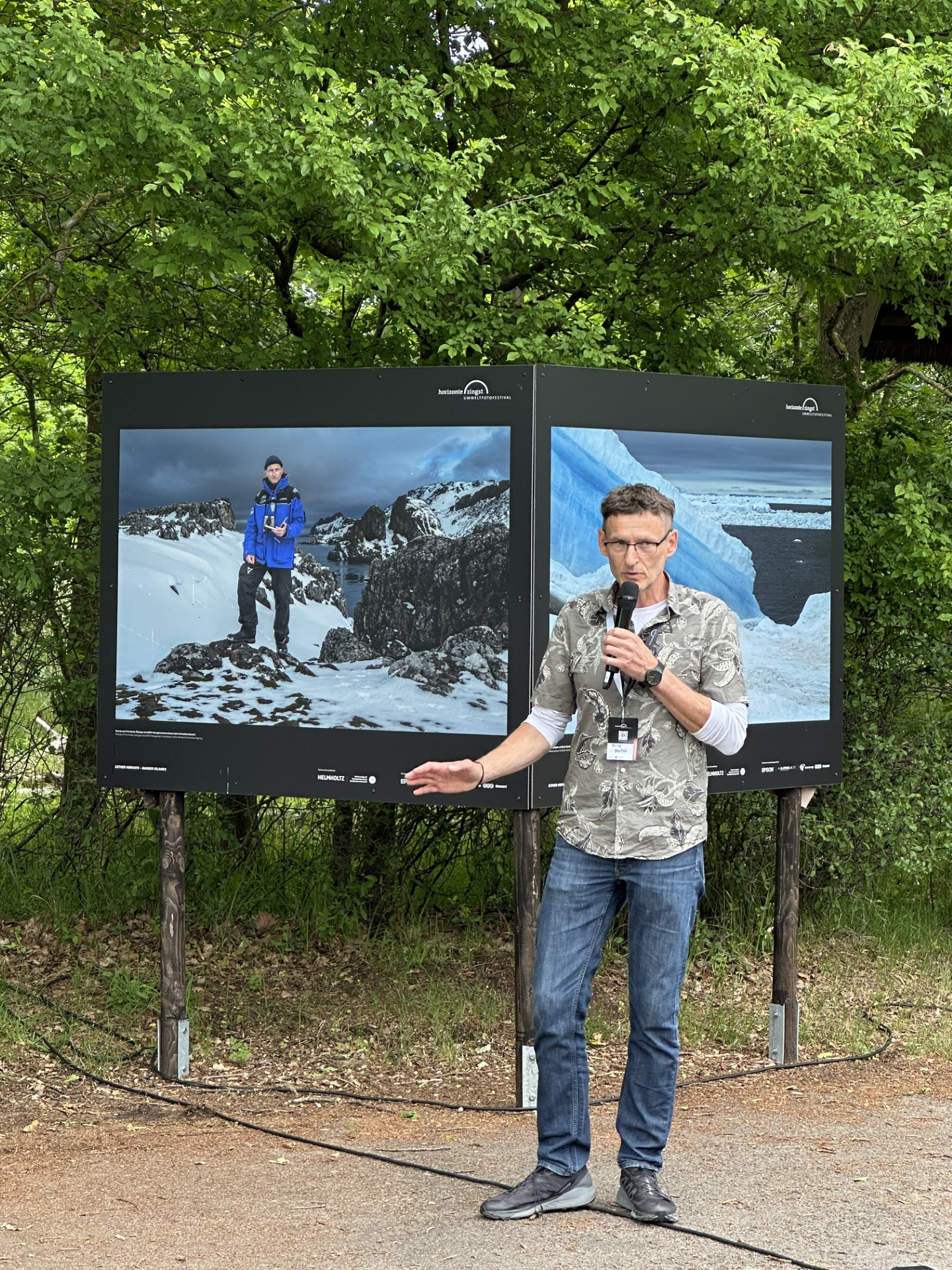
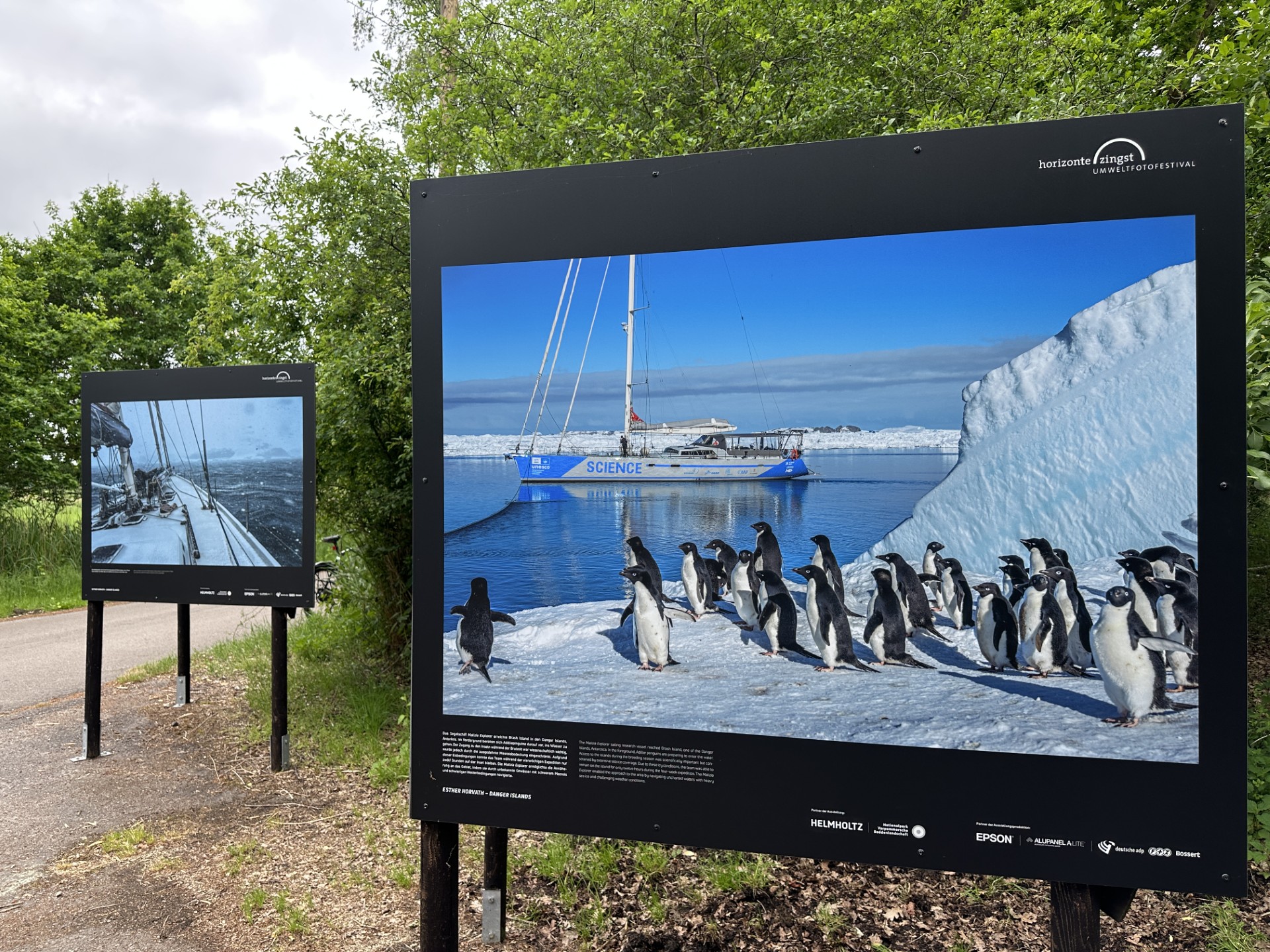
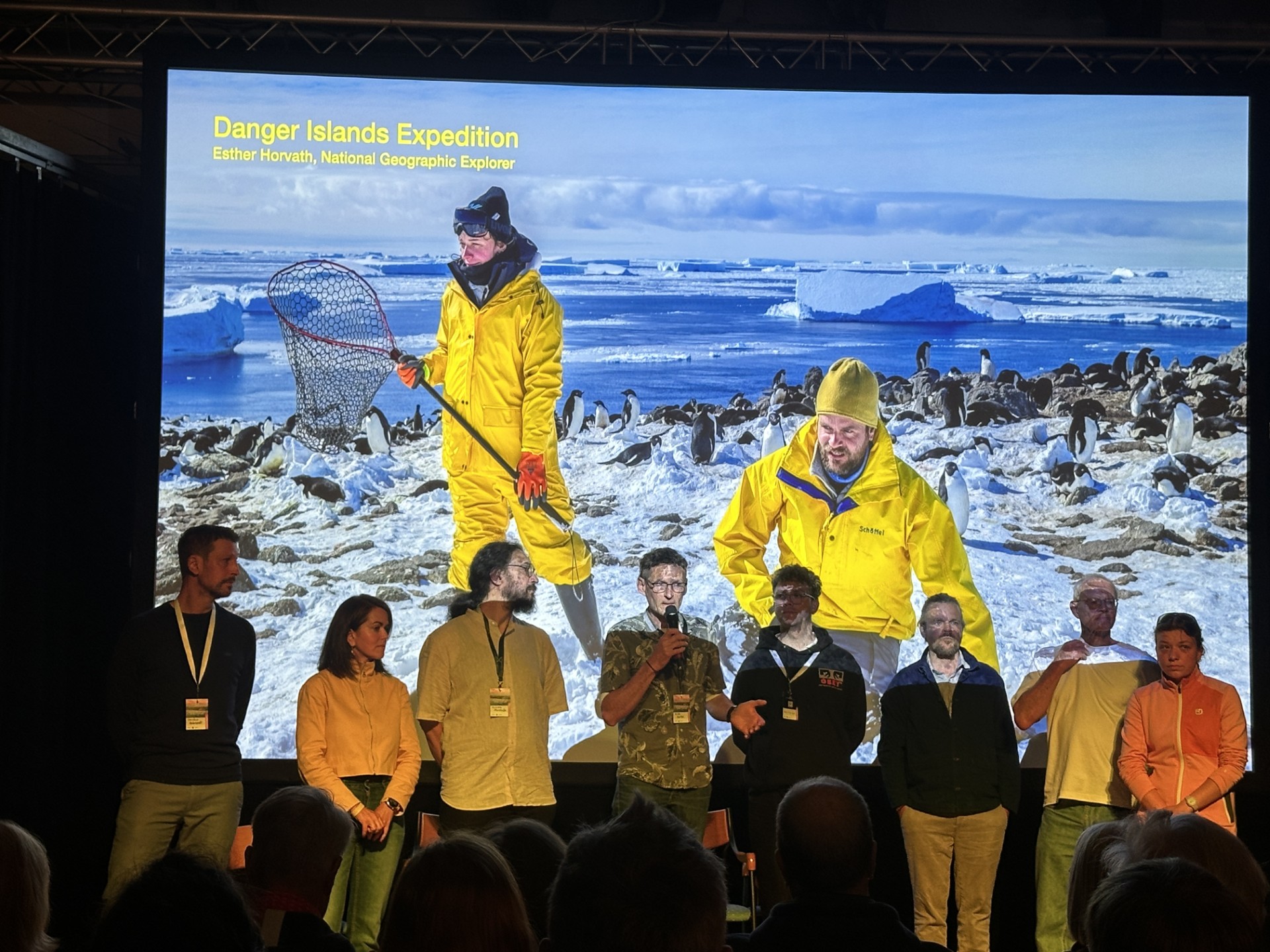
The occasion for the conversation was the opening of the photo exhibition “Danger Islands” by National Geographic Explorer Esther Horvath on May 31, 2026, as part of the environmental photo festival »horizonte zingst«. The exhibition will be on view until November 2026 in front of the Sundische Wiese information center in the Vorpommersche Boddenlandschaft National Park. Following the panel discussion with all expedition participants, DOG President Dorit Visbeck-Liebers spoke with Fritz Hertel about the creation of the protected area, the importance of the region for seabirds, and the challenges of nature conservation in Antarctica.
Interview
June 1, 2026
Dorit Visbeck-Liebers for the German Ornithological Society (DOG)
Fritz, how did you become aware of the Danger Islands—and when did the idea of working for their protection first come about?
The idea of establishing a protected area in Antarctica had been simmering in my mind for a long time. After all, the Antarctic Treaty parties committed themselves very early on, almost 30 years ago, to establishing a representative network of protected areas, and Germany had never taken part. To change that, about 10 years ago I launched a project to identify suitable protected-area candidates. Together with Osama Mustafa and his geography team at the Thuringian Institute for Sustainability and Climate Research (ThINK), after extensive research we finally compiled a list of suitable candidates, with the Danger Islands at the top because of their outstanding ecological importance. This was followed by a laborious designation process, which took several more years until it was finally completed in 2024.
What makes the Danger Islands so special from a birdlife perspective, and which species were particularly in focus during the conservation efforts?
What makes this relatively small island archipelago of just under 5 square kilometers special, first of all, is its comparatively high biodiversity. At least 10 different bird species breed there, which is quite impressive by Antarctic standards. Secondly, it is home to the largest known local population of Adélie penguins, a penguin species found almost exclusively in Antarctica and, in the area of the Antarctic Peninsula, increasingly retreating due to climate change. It is all the more astonishing that our latest count found a population of about 850,000 breeding pairs across all Danger Islands colonies! Why we find so many Adélies there is still a mystery.
What role do the surrounding marine areas play for the protected area—and to what extent are they included in the protection measures?
We are currently trying, with the help of satellite trackers, to identify the penguins’ main feeding grounds with the aim of expanding the protected area to include a corresponding marine component when the management plan is first revised. That would significantly strengthen protection for the penguins, because krill fishing would then also be prohibited there. But that is still a long and difficult road, because at present the data situation is still too thin, and obtaining approval from the fisheries commission will not be easy.
Germany bears a special responsibility for this area. What tasks and challenges do you see in the years ahead?
Germany is responsible for managing this protected area, which includes regularly revising the management plan. We intend to visit the area every two years and map the huge bird colonies with the help of long-range drones. The goal is to derive trends over time and thus assess the status of the local population. Fixed cameras that record phenological data and provide indications of breeding success are also meant to help us. Getting to the Danger Islands is no easy task because of the considerable effort involved. On our first expedition, we were fortunate that Boris Herrmann and his team safely brought us to Antarctica and back to Tierra del Fuego aboard their research sailing ship Malizia Explorer. It was an adventurous trip and an extraordinary experience! The biggest challenge, however, is—unsurprisingly—funding, because so far there is still no viable medium- or long-term financing in sight for this truly ongoing task.
If you could make one wish for the future of Antarctica and its birdlife—what, in your view, should happen next?
I don’t have to think long: krill fishing in Antarctica must end! Every year it deprives thousands of seabirds of their food base. In addition, all Antarctic Important Bird Areas (IBAs) identified so far should be designated as protected areas immediately, and the emperor penguin should finally receive special status as a specially protected species (under Annex II of the Environmental Protocol to the Antarctic Treaty). Sorry, that was three wishes at once. 😉
About the person
Fritz Hertel works as an ecologist at the German Environment Agency in Dessau and has been working on Antarctica and its birdlife since 2002. He was one of the initiators of efforts to protect the Danger Islands off the Antarctic Peninsula and has been committed for many years to preserving this unique habitat.