Bluesky Icon Instagram Icon

Museum collections

© DMM, Anke Neumeister

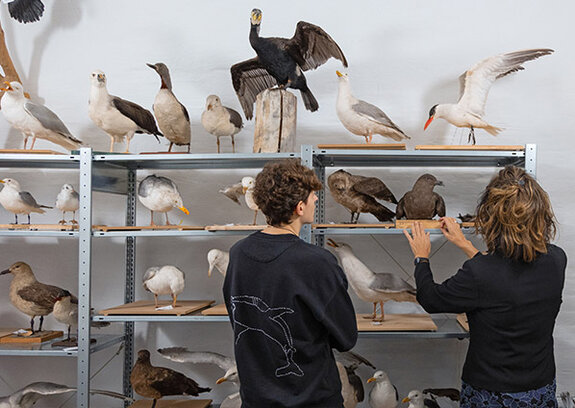
German Maritime Museum

The ornithological collection of the German Maritime Museum comprises around 1,400 specimens of seabirds and coastal birds, as well as an extensive historical egg collection. It focuses on the coasts of the North Sea and Baltic Sea, as well as numerous records from the museum’s former areas of responsibility on the islands of Oie and Kirr in the Barther Bodden.

© Landesmuseum Natur und Mensch Oldenburg

State Museum Nature and
Human Oldenburg

The bird collection comprises approx. 16,000 objects, with eggs making up about half. The collection's main focus is the Weser-Ems region in northwest Lower Saxony. However, non-European specimens also date from the museum's early years (founded in 1836).

© UHH-MCC-Mentz

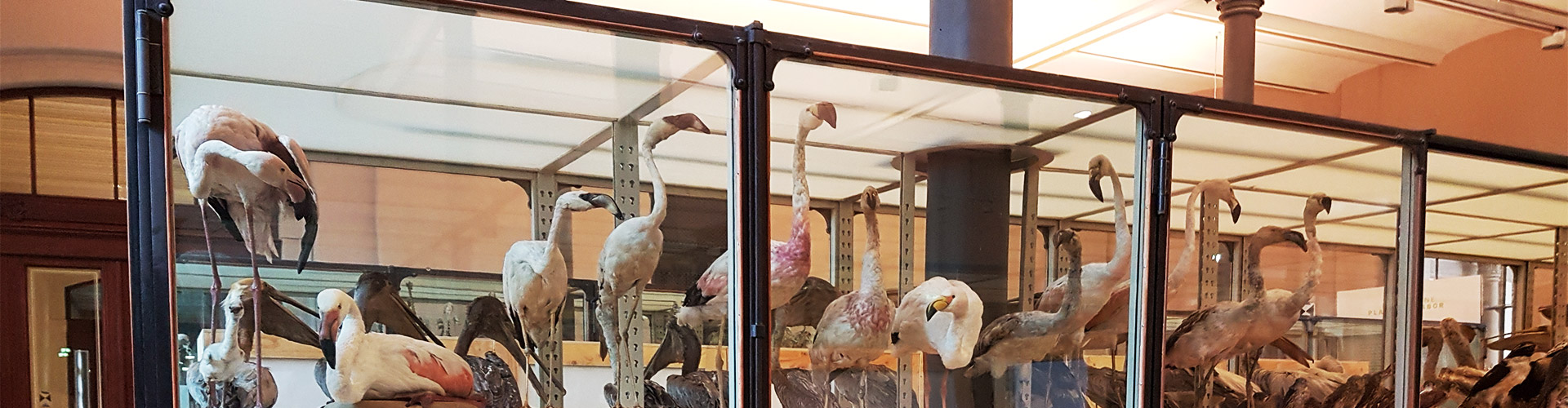
Museum of Natural History Hamburg - Zoology

Founded in 1843 by citizens of Hamburg as a natural history (zoological) museum, it suffered substantial losses in World War II. The ornithological collection documents a high level of species diversity, also represented by extensive historical material and type specimens, as well as a magpie collection covering all of Europe.

© Museum Luzern, David Nunes

Museum Lucerne – Nature, History and Culture

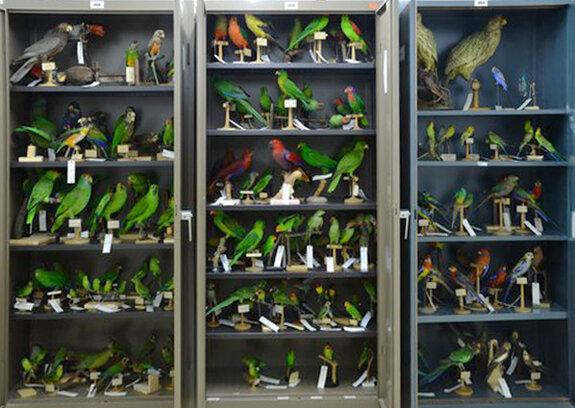
Our zoological collection comprises primarily specimens of native birds and mammals. Highlights include a Greenland collection from 1908 and a historic parrot collection, including a pair of Paradise Parakeets from 1880, now extinct.

© MfN, Carola Radke

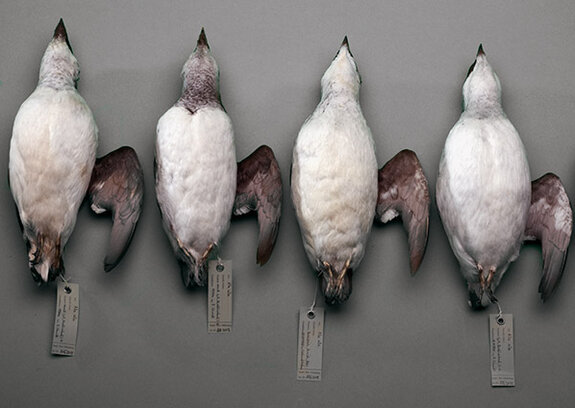
Museum of Natural History Berlin

The ornithological collection of the Museum of Natural History Berlin, founded in 1810, is the largest bird collection in Germany. Among the more than 200,000 collection objects are around 6,000 type specimens as well as other ornithologically and historically significant reference specimens.

© Konrad Kürbis

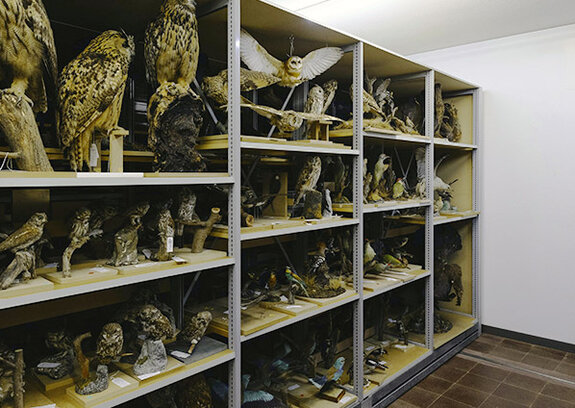
Natural History Museum Erfurt

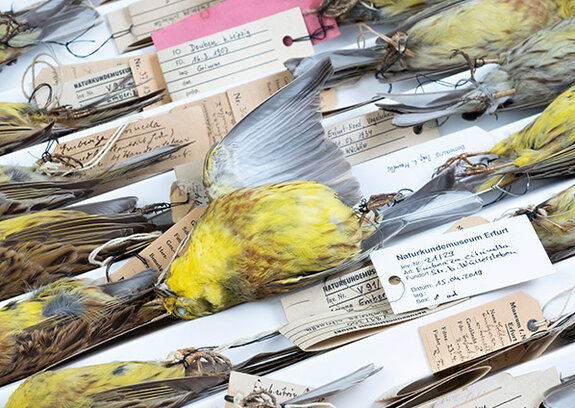
The ornithological collection of the Natural History Museum Erfurt is a small collection with approx. 12,000 objects. The focus is on collection specimens of Thuringian birds. In addition, due to the Himalayan research, another focus has been placed on Asia.

© NMBE, Lisa Schäublin

Natural History Museum Bern

The ornithological collection consists primarily of skins, mounts, skeletons, eggs, and tissue samples. Geographic focal points are the European avifauna, particularly Swiss, as well as South American bird fauna. Important historical collections by well-known ornithologists form the basis of the collection, which is continuously being expanded.

© A. Schumacher/NHMW

Natural History Museum Vienna

The bird collection of the Natural History Museum Vienna is the only public research institution in Austria dedicated exclusively to birds, and is one of the most significant collections worldwide. It comprises over 150,000 objects – including skins, skeletons, eggs, and nests.

© Senckenberg, Sven Tränkner

Senckenberg Research Institute and Natural History Museum Frankfurt

The collection comprises approximately 90,000 skins, 23,000 skeletons, 4,000 alcohol-preserved specimens, and 5,000 clutches. Numerous type specimens, especially by Eduard Rüppell, Carlo von Erlanger, and Hans von Berlepsch. The skeleton collection built up over the last 30 years is one of the most extensive in Europe and among the 15 largest collections worldwide.

© Staatliches Museums für Naturkunde Stuttgart

State Museum of Natural History Stuttgart

The bird collection of the State Museum of Natural History in Stuttgart, with over 154,000 objects from around the world, is one of Germany's six largest, alongside those in Berlin, Frankfurt, Munich, Bonn and Dresden.

© Markus Scholz

Central Repository of Natural Science Collections of Martin Luther University Halle-Wittenberg

Founded in 1769, the collection is rich in early biodiversity records, type specimens and rare bird species. It comprises approx. 25,000 bird skins and skeletons and 20,000 bird eggs of almost 4,000 species.