


DOG in conversation:
Memory culture in the DOG
Five questions for historian Swen Steinberg
Historian Dr. Swen Steinberg has been working for many years on the history of the Niethammer family of entrepreneurs and their paper company, founded in 1856. Through the surviving company and family archive, he came across Günther Niethammer and his work as an SS guard at the Auschwitz concentration and extermination camp. His research and publications are among the most important recent studies on this chapter in the history of the German Ornithological Society (Steinberg 2018). On July 26, 2026, DOG President Dorit Visbeck-Liebers met Swen Steinberg in Kingston (Canada) and asked him for an interview.

Interview
16 August 2026
Dorit Visbeck-Liebers for the German Ornithological Society (DOG)
Dear Swen, you are a historian and today you teach in Canada. How did you first become aware of the history of the German Ornithological Society and of Günther Niethammer?
As part of my dissertation, completed at TU Dresden in 2013 and published in 2015, I focused primarily on the paper mills Kübler & Niethammer in Saxony, which until 1945 were the largest family-owned German company in the industry. The starting point was above all the connection between religion and economic activity, which could be examined here across three generations of entrepreneurs. In the end, however, it also became a detailed study of the industrialization of a rural region between 1856 and 1956, with all its economic, political, and social ruptures and continuities.
Günther Niethammer, born in 1908, was the youngest son of the third entrepreneurial generation. Unlike his four older brothers, he did not join the management of the company in 1931. At first, I was only interested in how he and his sisters were financially involved in the company or in the decisions associated with it.
So the starting point of your research was actually not Günther Niethammer, but rather the paper mills Kübler & Niethammer in Kriebstein on the Zschopau in Saxony. When did it become clear to you that there was an entirely different story behind this?
Exactly, I only came across Günther Niethammer’s biography beyond the company by chance. And I probably would not have pursued it further if I had not—if I recall correctly, it was in 2007—found letters in the extensively preserved Kübler & Niethammer holdings at the Saxon Economic Archives in Leipzig, which he sent in 1940 as an SS guard from Auschwitz to members of the family.
Of course, this aroused my interest, and numerous research projects followed over many years. They were also inspired by the debates already taking place within the DOG at the time about Niethammer’s role. Ornithologists such as Eugeniusz Nowak had already begun researching and publishing on him before I did. Niethammer was therefore also linked to a very current culture-of-remembrance debate within a leading German professional society, which greatly interested me and continues to the present day.
What especially interested you about Günther Niethammer as a historical figure? Did your view of him change over the course of your research?
At first, I only knew Günther Niethammer in the context of the company and as the son of an entrepreneurial family. His biography as a scientist, especially during the Nazi era and afterward, was however tied to questions about individual room for maneuver and forms of self-mobilization. My focus increasingly also turned to the period after 1945, to Niethammer’s scientific and non-scientific networks, and to how he was dealt with within his family.
In short: Günther Niethammer changed for me from being a son of the third entrepreneurial generation into a person who had to be situated within the history of German science as well as the history of National Socialism and the Holocaust, and the later handling of this past. In my article published in 2018, “Birding in the Concentration Camp”, I tried to portray this complexity. In doing so, I was particularly concerned with the question of what motives and opportunities led an ornithologist like Niethammer first to Auschwitz as an SS guard, and later also to the SS Ahnenerbe and the Hygiene Institute of the Waffen-SS.
For your research you were able to evaluate an exceptionally large number of sources. Which archives and documents were available to you, and which findings were especially surprising or revealing for you?
The starting point was the already mentioned extensive holdings at the Saxon Economic Archives, which are not merely company records, but also the archive of the entrepreneurial family. Based on this research, I was able to consult materials in Berlin, Bonn, Dresden, Vienna, and Warsaw; I also worked in the Auschwitz-Birkenau archive.
So I had access to a wide range of documents: from private correspondence and exchanges with academic colleagues, to official records of National Socialist organizations, to the court files from the trial against Niethammer in Poland, as well as materials from after 1949.
On its own, the Niethammer case was not especially unusual: beyond his self-mobilization within the National Socialist state, he and his scientific network exhibited a process of suppression and forgetting after 1945, as can also be found among other scientists and in other disciplines. What was unusual, however, was his profession as an ornithologist and his work, especially in Auschwitz, where in the face of the emerging Holocaust he continued to work scientifically and also published his “Observations on the Birdlife of Auschwitz” in 1941/42.
Without question, what surprised me were Niethammer’s few surviving personal reflections from the post-1945 period that I was able to find; likewise, the personal documents preserved in his estate in Bonn—such as his “shooting log” from Auschwitz, which documented his hunting trips, among others, with the camp commandant Rudolf Höß and his son. Time and again, I encountered an evident distance, or rather outright silence, in the records—and at times a bizarre proximity to the Nazi regime and the Holocaust.
The DOG has begun to critically examine its own history. Why is such historical reappraisal important for scholarly professional societies—and what would you want to pass on to the DOG on this path?
In my view, this engagement is important above all for two reasons: first, inwardly and for the DOG and its members. The example of Niethammer says a great deal about forgetting and silence, which subsequent generations already questioned but never truly addressed. What remained was a diffuse picture of the role of individual scientists and of the society as a whole. For a long time, one of the central misunderstandings was probably that this was solely about assigning blame. Rather, it is about the honesty of telling the whole story—with all its frictions, contradictions, and certainly also uncomfortable truths. The initiative now underway to critically examine the history of the DOG is therefore to be greatly welcomed and will help answer many open questions.
Other professional societies began this process long ago or are in the midst of it. Here, secondly, the history of the DOG under National Socialism—but also beyond that, especially in the context of the colonial past and with regard to the continuity of scientific networks after 1945 in both German states—can make an important contribution to the history of science and make clear that science always takes place within socio-economic and political contexts.
In that sense, this engagement with history is neither an “obligatory task,” nor is it an end in itself or merely the maintenance of tradition. Rather, it is always also a look in the mirror—and is linked to questions such as tolerance, solidarity, democracy, and openness. In the case of Günther Niethammer, the other side of the same coin becomes visible: when it comes to conformity or even conviction, and when one becomes part of a criminal political system as a scientist and thus oneself a perpetrator. I therefore hope that the DOG will find suitable formats to discuss and present this openly.
About the person
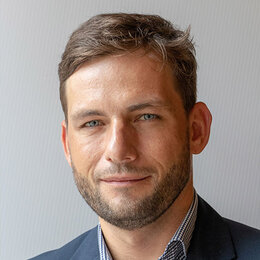
Swen Steinberg researches and teaches in the Department of History and the School of Religion at Queen’s University in Kingston, Ontario, and is an affiliated researcher at the German Historical Institute Washington. His research focuses on migration history, the history of knowledge, and the history of science. Since 2024, he has also been involved in the research project on the history of the Dresden University of Technology under National Socialism and is working there in particular on the Tharandt Forestry College and the forestry sciences.


Publications
Birdwatching in the concentration camp
Swen Steinberg: “Birding in the concentration camp.” Biography, networks, and interpretations of the ornithologist and SS-Untersturmführer Günther Niethammer. In: The SS after 1945. Narratives of exoneration, popular myths, European memory discourses, ed. by Michael Wildt and Jan Erik Schulte (Göttingen: Vandenhoeck, 2018), 215-252