


Specialist Group
Bee-eaters
Aims of the specialist group
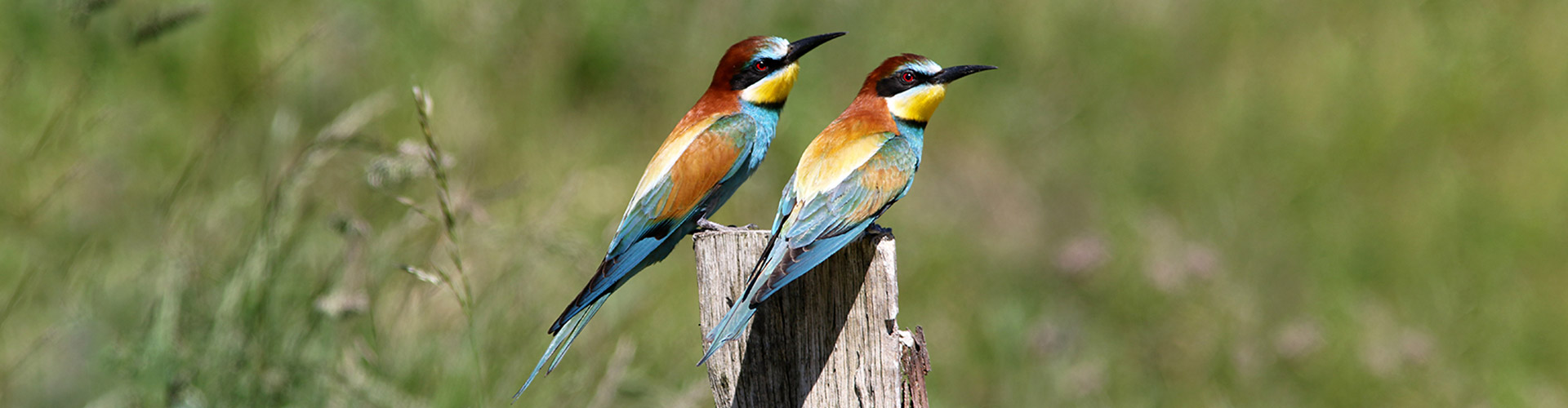
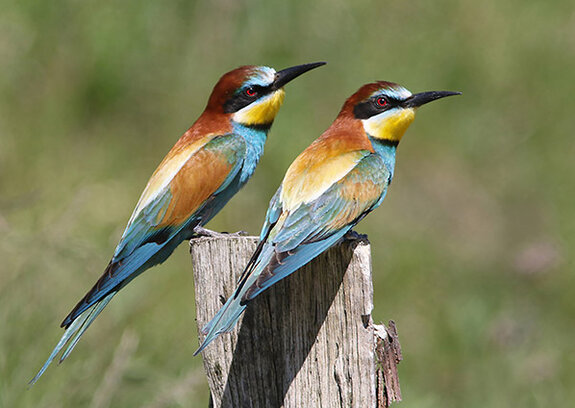
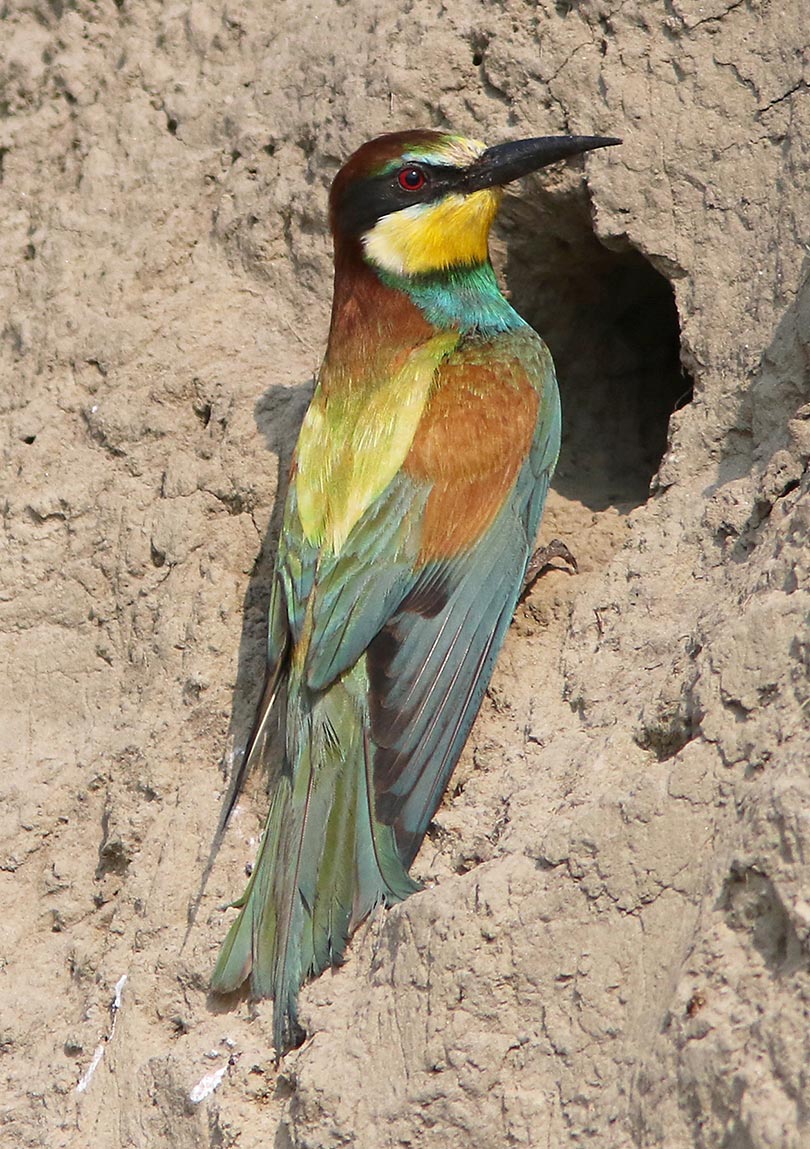
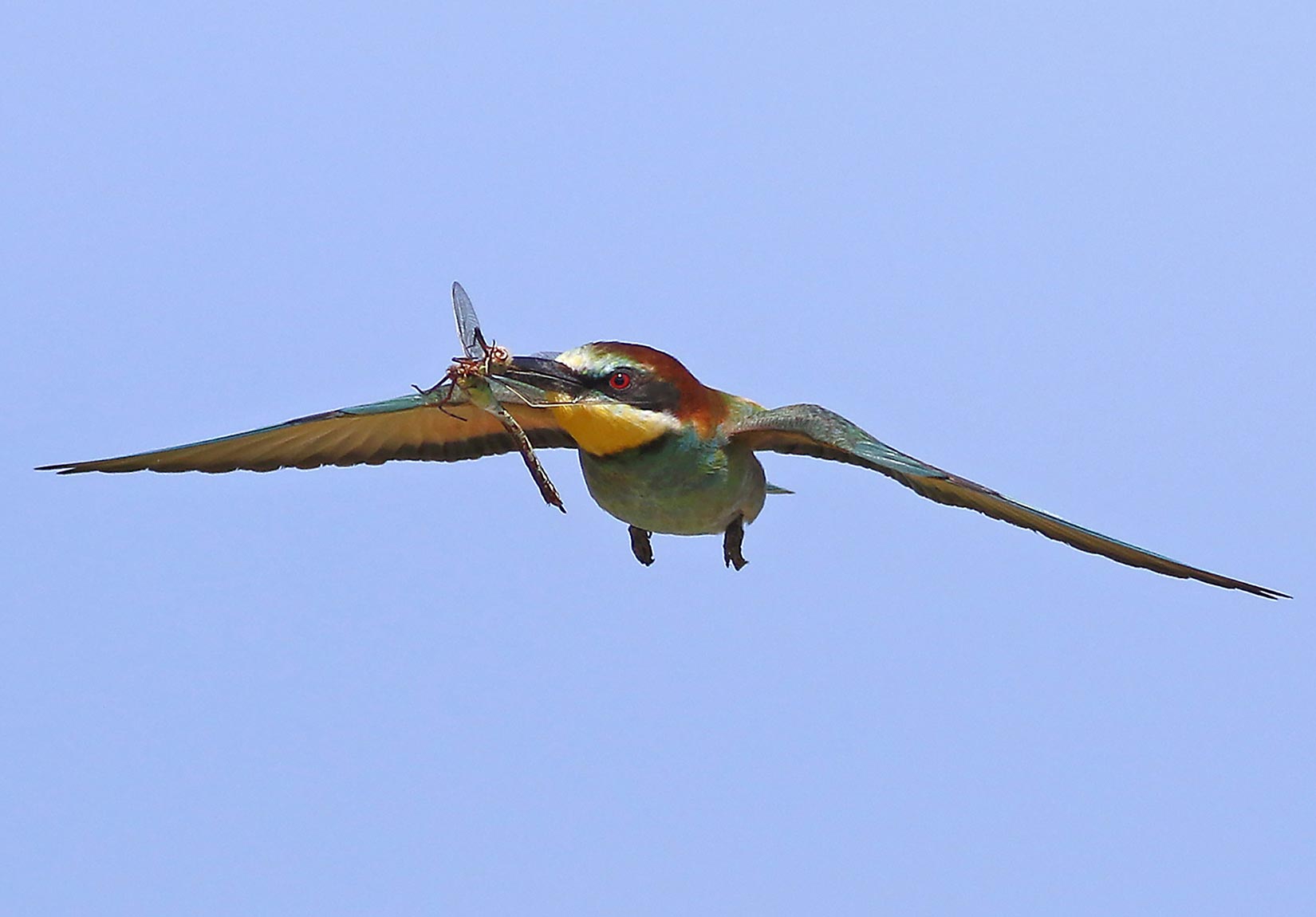
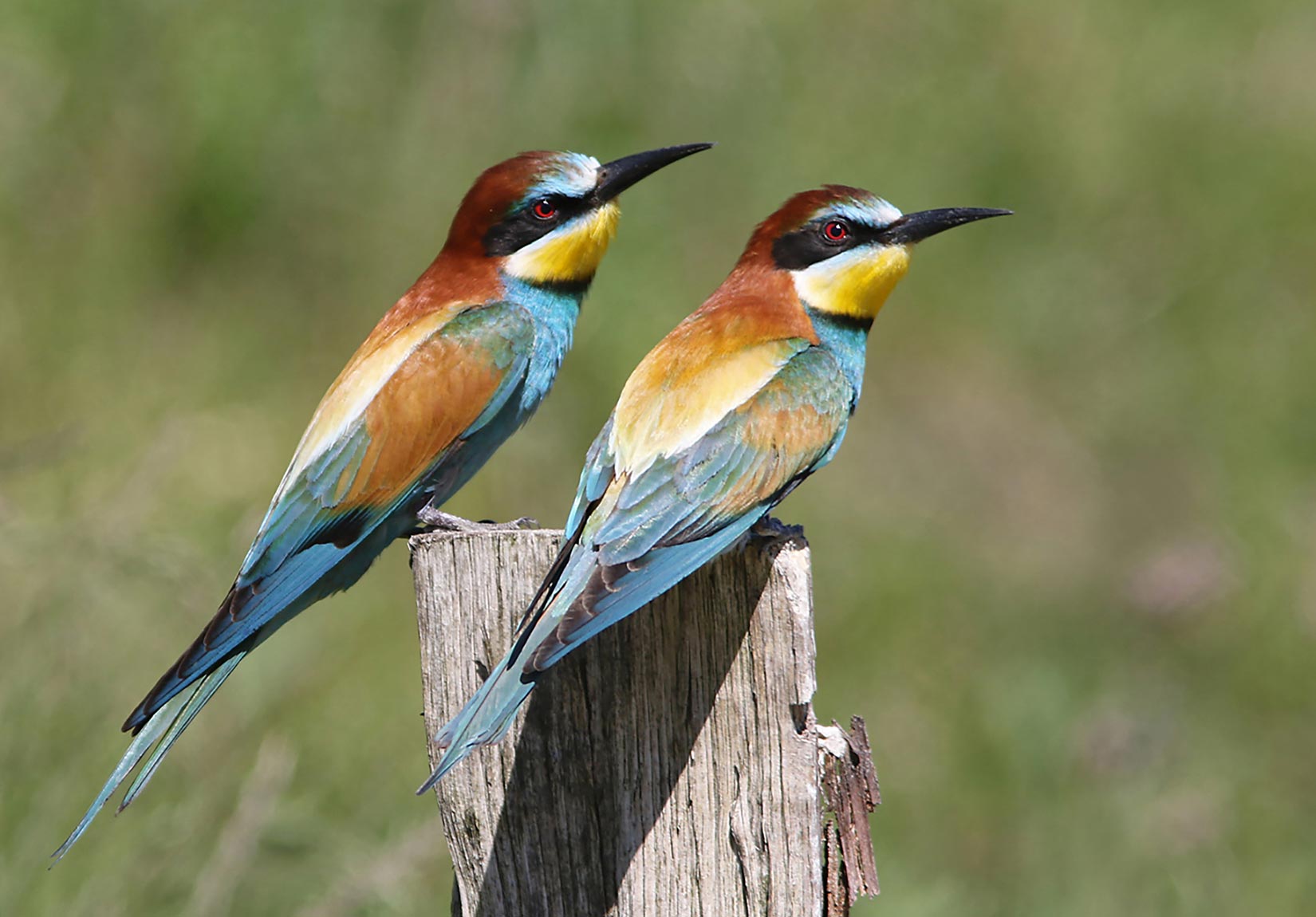
The Specialist Group (SG) Bee-eaters is dedicated exclusively to the European Bee-eater (Merops apiaster) and works closely with the DDA, the Radolfzell Bird Observatory, various state bird conservation centres, state environmental authorities and numerous committed amateur ornithologists and scientists.
Using the breeding population data collected every year by many members of the specialist group and supplementary ecological information, the group aims to create a database – to better understand the fascinating range expansion of the Bee-eater and its dynamics.
In addition to the coordinated nationwide breeding census, the group seeks close professional exchange with species specialists in Germany and abroad.
Main activities of the specialist group
- Organisation of annual population surveys with substantial support from regional coordinators
- Creation, maintenance and further development of the breeding database (status of the database as of mid-2025)
- Breeding records since 1950 (partly also historical records)
- So far approx. 50,000 broods from more than 1,000 sites in Germany
- More than 4,300 broods from other countries - Documentation of populations and population trends in Germany and some neighbouring countries
- Presentation of national and regional population trends
- Further detailed analyses, e.g. of site habitats
- Annual reports to the members of the specialist group and as a download
- Publications on aspects of range expansion


Meetings and events
Members of the specialist group meet for informal exchanges during the DOG annual conventions.
Participation
If you are interested, please send us a message, contact one of the spokespersons of the specialist group or drop by our annual meeting during the DOG Annual Convention. We welcome new members and ideas.

Publications – Statements – Documents
Annual reports of the specialist group
on activities and population trends
- 13th Annual Report 2025 SG Bee-eaters
- 12th Annual Report 2024 SG Bee-eaters
- 11th Annual Report 2023 SG Bee-eaters
- 10th Annual Report 2022 SG Bee-eaters
- 9th Annual Report 2021 SG Bee-eaters
- 8th Annual Report 2020 SG Bee-eaters
- 7th Annual Report 2019 SG Bee-eaters
- 6th Annual Report 2018 SG Bee-eaters
- 5th Annual Report 2017 SG Bee-eaters
- 4th Annual Report 2016 SG Bee-eaters
- Annual Report 2014 SG Bee-eaters
FAQ Specialist Group Bee-eaters
Since when has the specialist group existed?
The Specialist Group "Bee-eaters" was founded in 2013. At a Bee-eater symposium in Kerzenheim (Rhineland-Palatinate) in 2012, the speakers expressed the wish for a forum in which everyone interested in and researching Bee-eaters throughout Germany could exchange ideas. The idea of placing this under the umbrella of the DO-G was very well received, and the Executive Board also agreed to establish a specialist group dedicated to a single species.
From the very beginning, Hans-Valentin Bastian has acted as spokesperson of the Specialist Group "Bee-eaters". Initially he was supported by Jörn Weiß from Rhineland-Palatinate; from 2017 to 2020 Susanne Arbeiter from Saxony-Anhalt was co-spokesperson, and since then it has been Markus Jais from Bavaria.
How many members does the specialist group have?
The specialist group's mailing list has more than 120 members from various countries. Not only Bee-eater enthusiasts from Germany are part of the group, but also from Switzerland, Austria, Denmark, the Netherlands, Luxembourg, the UK and Poland. And since certainly not everyone who maps Bee-eater occurrences and reports the number of breeding pairs via the state coordinators or the DDA's Bee-eater recording tool is a member of the group, many more people are involved in our specialist group – if membership is interpreted generously.
Who can take part?
In our third annual report in 2015 we wrote: "We will continue to strive to encourage everyone who is actively involved with Bee-eaters, or simply interested in this bird species, to join the specialist group." – This still applies today. Anyone who is interested can contact the spokespersons of the specialist group and ask to be added to the mailing list – and thus to the specialist group.
- bastian-kerzenheim@t-online.de