


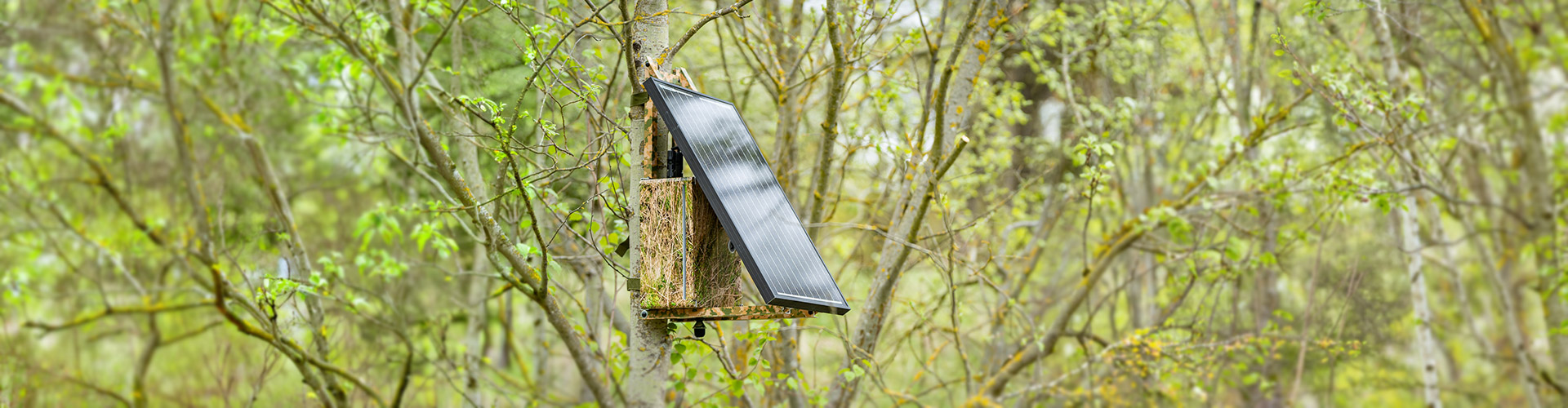
Passive acoustic monitoring (PAM) has come a remarkable way in recent years: from a specialist method used by a few research groups to a technique increasingly used in research projects, official monitoring and consultancy practice. Autonomous recorders have become affordable, AI-based species classification has reached a level of maturity that supports practical applications, and the first methodological frameworks are available. With this spread, there is a growing need for professional exchange on devices and recording parameters, spatial and temporal survey design, the analysis of large data sets, the robustness of results and, not least, the legal framework.
This is exactly where the newly founded Specialist Group Acoustic Monitoring of the Deutsche Ornithologische Gesellschaft comes in. It sees itself as a network and forum for everyone who applies, develops or evaluates acoustic methods in ornithology – from research, planning practice, authorities, voluntary conservation or privately in their free time. The group was founded in response to repeated requests from members for a place where professional and technical questions on the subject could be brought together. With the discontinuation of the Specialist Group Bioacoustics, there is also a gap in the field of acoustics in the DOG, which the new specialist group aims to close.
The specialist group is intended to take a broad approach. Possible fields of work include sharing experience on recording technology and field deployment, discussing minimum methodological standards and quality assurance, dealing with automated AI-based analysis and its validation, the compatibility of acoustic data with existing monitoring programmes, and legal aspects of sound recording in the field. Just as important is a look at practice: which questions can PAM answer reliably – and which not? Which requirements make sense, and which are technically or financially excessive?
A first in-person meeting to collect topics, needs and focal areas is planned at the DOG Annual Convention in Mainz on 17 September 2026 from 5 to 6 pm. The meeting point is in front of the conference office.
The aim is a lively specialist group that thrives on the exchange among its members – from experienced users and developers to anyone who is simply curious about what a recorder in the field can reveal about birdlife. You are warmly invited to join.