


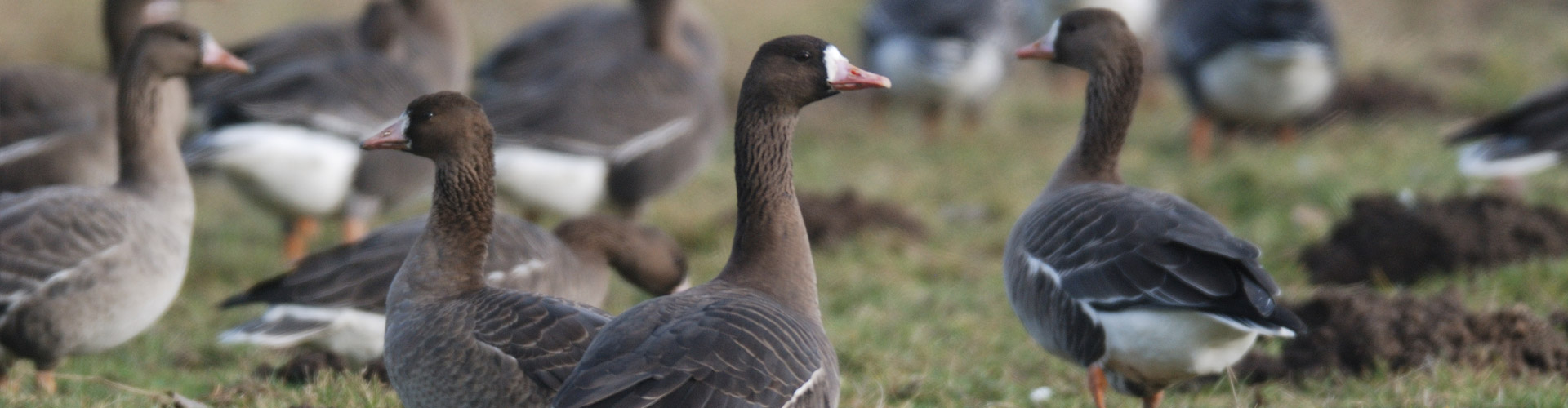
Meeting of the Specialist Group: Goose Ecology
20th conference, 6–8 February 2026 in Potshausen
Tracking birds with high tech: much more than Nils Holgersson and the gander Martin
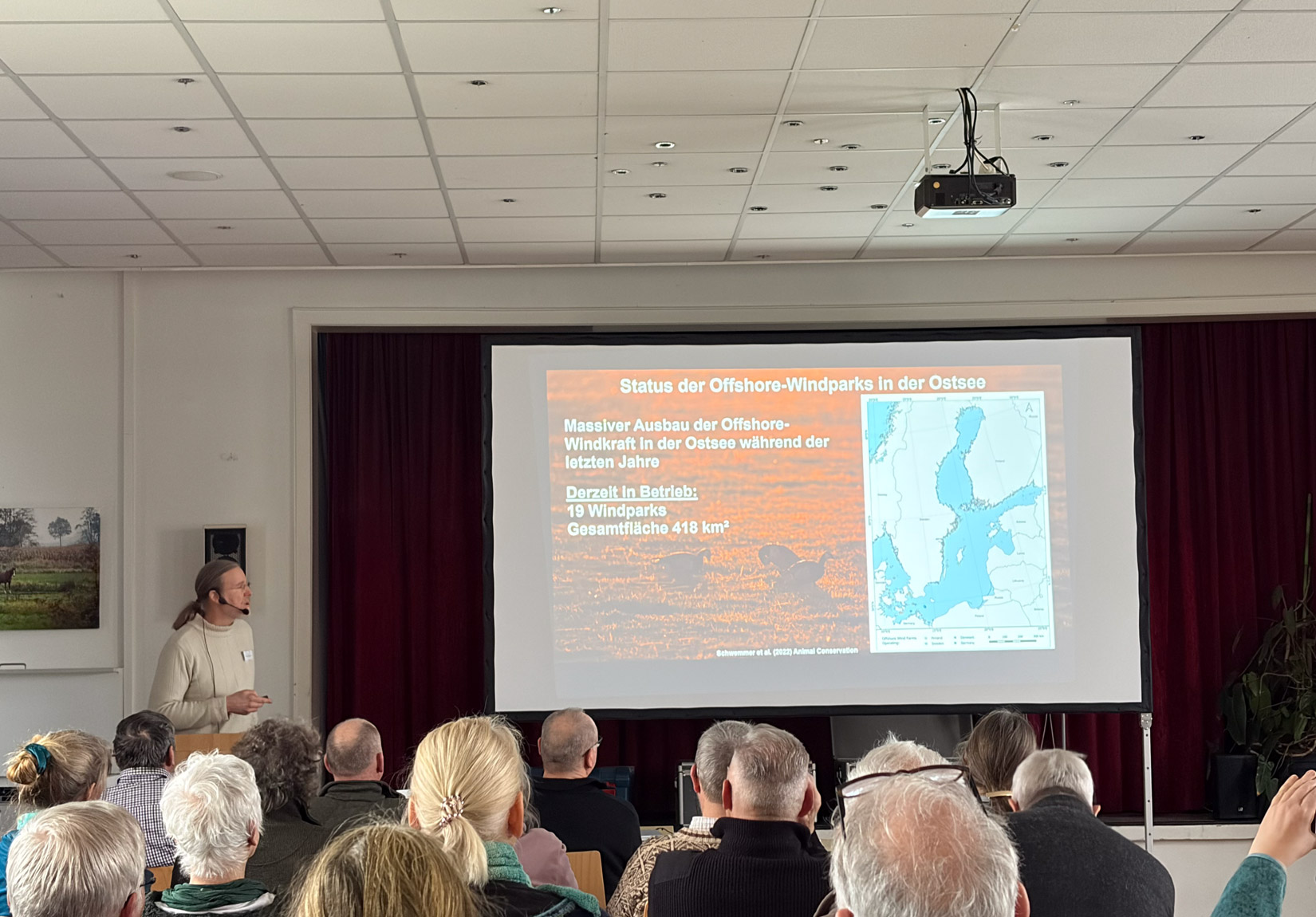
More than 50 goose researchers and bird enthusiasts are meeting this weekend for the 20th conference of the DOG and DDA Specialist Group Goose Ecology at the Bildungszentrum Ostfriesland in Potshausen. Researchers from all over Germany and colleagues from the Netherlands are coming together to share and scientifically discuss their study results. In addition to talks on the Ems-Dollart region as one of the most important stopover sites for migratory birds in Europe, the programme includes reports on the migratory behaviour of various waterbird species, new findings on avian influenza and on the effects of offshore wind farms on bird migration. On Saturday, presentations on catching and ringing geese, ducks and swans and on the statistical analysis of data, especially from tagged birds, cover a broad range of topics.
In an evening lecture, Dr. Helmut Kruckenberg first introduced everyone present to the Ems-Dollart region, and in particular the Leda-Jümme area, as a stopover site of European importance for geese and other migratory species, past and present. After an excursion on Saturday morning, the conference began a varied programme of scientific talks. While the morning focused on modern techniques for catching, tagging and analysis in research projects, results from ongoing projects were presented until Sunday lunchtime. Topics included the threat to goose migration routes from wind power in the North Sea and Baltic Sea, population trends of the threatened Lesser White-fronted Goose and Taiga Bean Goose, and the new phenomenon of Greylag Geese nesting on buildings in Hamburg. On Saturday evening, Dr. Maarten Loonen from the Arctic Centre of the University of Groningen reported on 35 years of research on Barnacle Geese in Svalbard.
Sunday morning was dominated by reports on the monitoring of breeding and staging goose species in Germany. Kim Lindner from the DDA presented the "National Report on the Status of Birds in Germany", which is compiled every 6 years and forms the basis for Germany's reporting obligations to the European Commission. The results of the summer population surveys in North Rhine-Westphalia and Lower Saxony were also presented. The conference concluded with a programme block on research projects from the Wadden Sea.
The group's first conference took place in Wilhelmshaven in 1994 under the direction of Prof. Dr. Hans-Heiner Bergmann. Since then, 19 further conferences have followed in almost all important goose staging regions. In addition to the ecology of goose species, current topics such as the impact of geese on agricultural land and the effects of hunting and other disturbances have repeatedly been on the agenda. Since 2011, Dr. Helmut Kruckenberg, a native of Leer, has been spokesperson of the specialist group.
Report by:
Dr. Helmut Kruckenberg